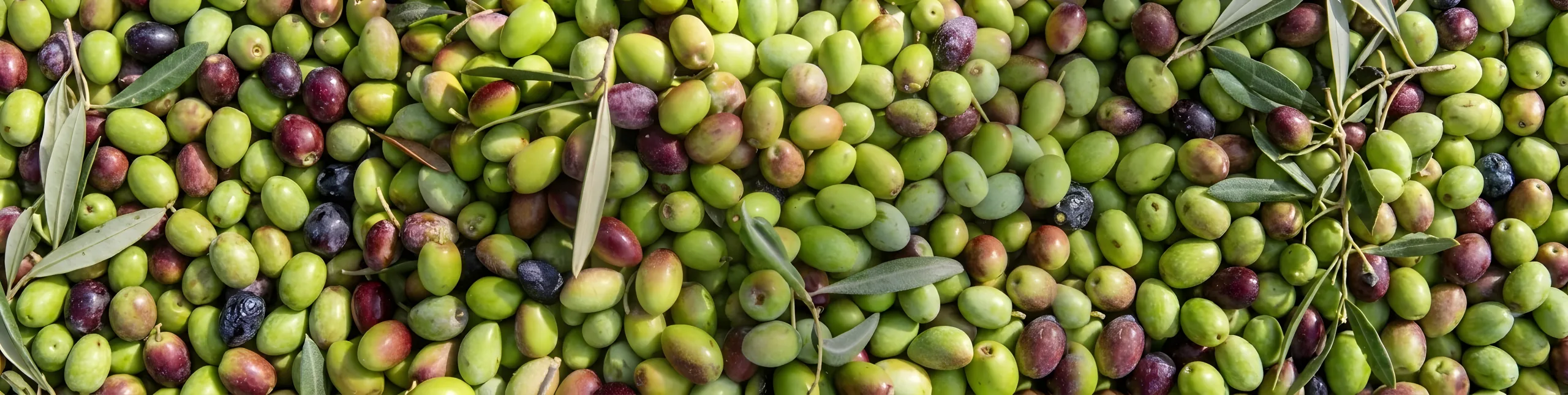
A country of olive trees
Olive growing in Tunisia goes back to Phoenician and Roman times, and the landscape still shows it: tens of millions of trees stretch from the north to the south of the country. In the 2025/26 season Tunisia produced a record of around 500,000 tonnes of olive oil, according to the government’s estimate.
Where Tunisian olive oil goes
Between November 2025 and August 2026, Tunisia exported more than 380,000 tonnes of olive oil. The European Union took more than half and North America about a quarter. Much of it travels in bulk (in flexitanks, IBC totes and drums) to bottlers in Spain and Italy, who blend it with other origins.
That’s why you’ll rarely see “Tunisia” on a supermarket bottle in Europe or the Americas: EU rules allow blends to be labelled simply as “a blend of olive oils of European Union origin and not of European Union origin”.
The varieties: Chemlali and Chetoui
Tunisia’s dominant olive variety is Chemlali, traditionally grown in the Sahel (around Sousse, Monastir and Mahdia) and in Sfax. It typically gives a smooth, delicate oil. In the north, Chetoui produces oils that are usually more robust, bitter and peppery. Tunisian producers have won many awards at international competitions such as the NYIOOC in recent years.
How to buy genuinely Tunisian olive oil
- Look for “Product of Tunisia” or a single origin on the label, not “EU and non-EU”.
- Prefer brands that name the region or farm and say who pressed the oil.
- Ask for the lab analysis of the lot, especially when buying in bulk.
Tresolivo was created exactly for this: olive oil from our own farm in Sousse, pressed in our own facility and sold under its own name. Read our story.
Sources: Tunisian Ministry of Agriculture estimates reported by La Presse de Tunisie and allAfrica (2026); Olive Oil Times; FAO AGRIS; EU Regulation 29/2012 on olive oil marketing standards.