Quality & process
From tree to oil: how Tresolivo is made
Real photos from our farm and our facility in Sousse, step by step.
How is extra virgin olive oil made?
Here is how that looks at Tresolivo, where every step happens on our own farm or in our own facility.
Seven steps from our trees to the tank

Harvest
Our olives are picked from the trees of our family farm in Sousse during the Tunisian harvest season, which runs through late autumn and winter.

Collection
Olives fall onto nets spread under the trees, so they don’t touch the ground, and are gathered into ventilated crates.
-
Reception
The crates go to our own facility nearby, so the olives are pressed within hours rather than days, while they are fresh and intact.
-
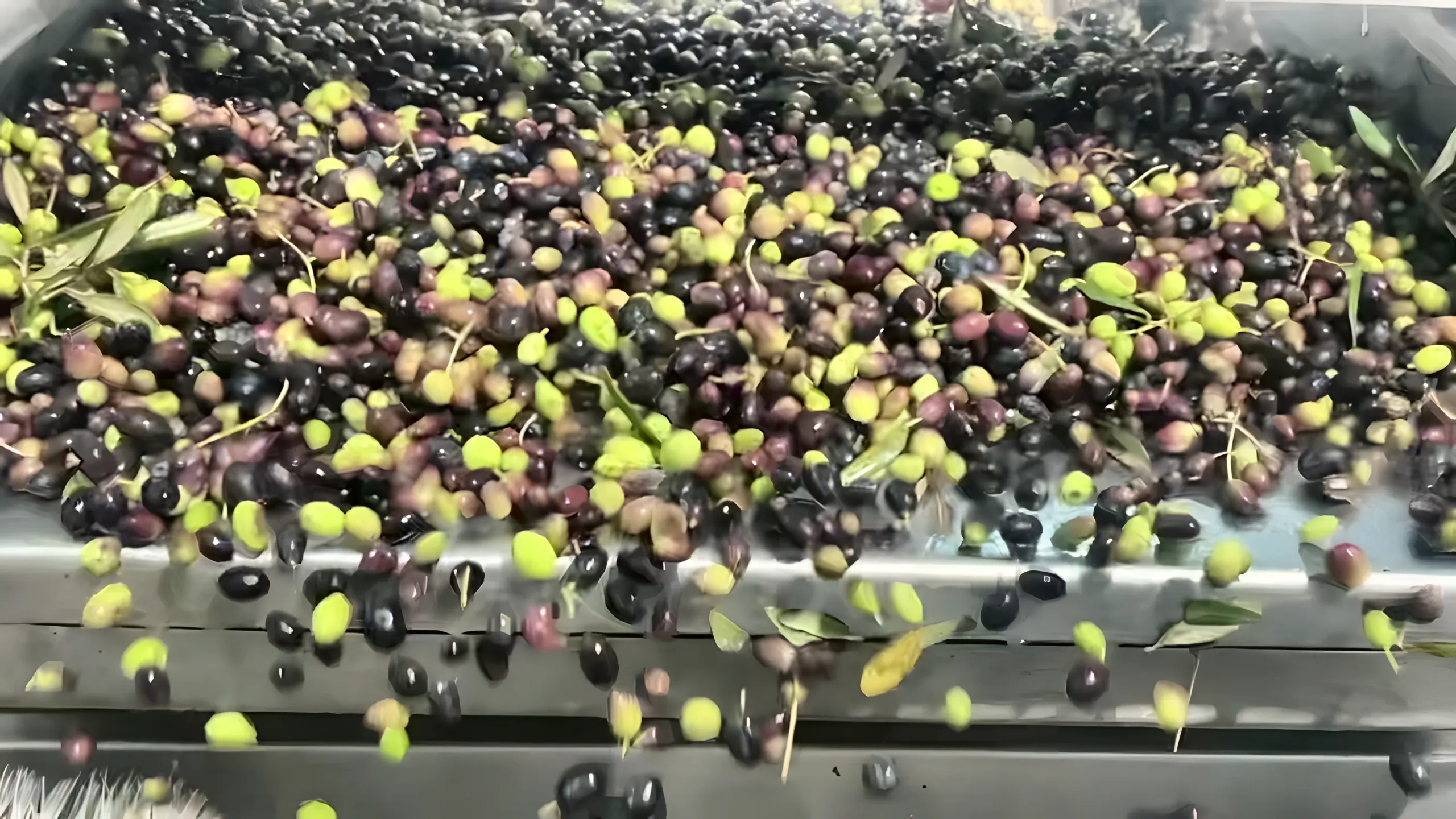
Leaf removal & washing
A vibrating sieve removes leaves and twigs, then the olives are washed to remove dust and soil.
-
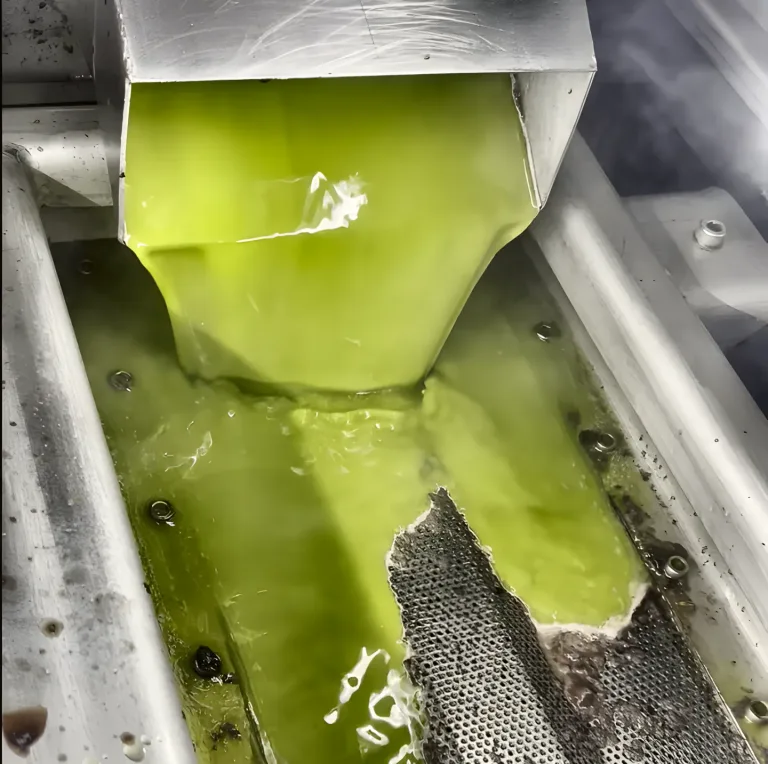
Crushing & malaxation
The olives are crushed into a paste and slowly mixed at low temperature, so the tiny oil droplets join together while the aromas are preserved.
-
Separation
A horizontal decanter and a vertical separator spin the oil away from water and solids by mechanical force only.

Testing & storage
The fresh oil is stored in stainless-steel tanks, protected from light and air. Each lot is analysed in the laboratory before it is sold.


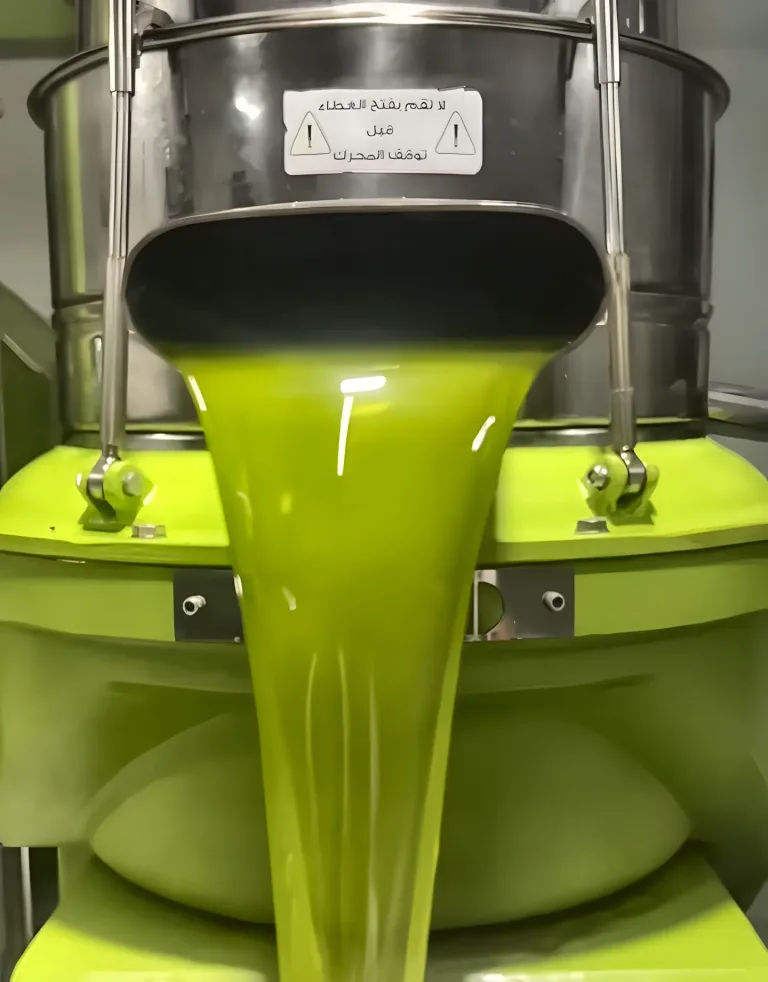
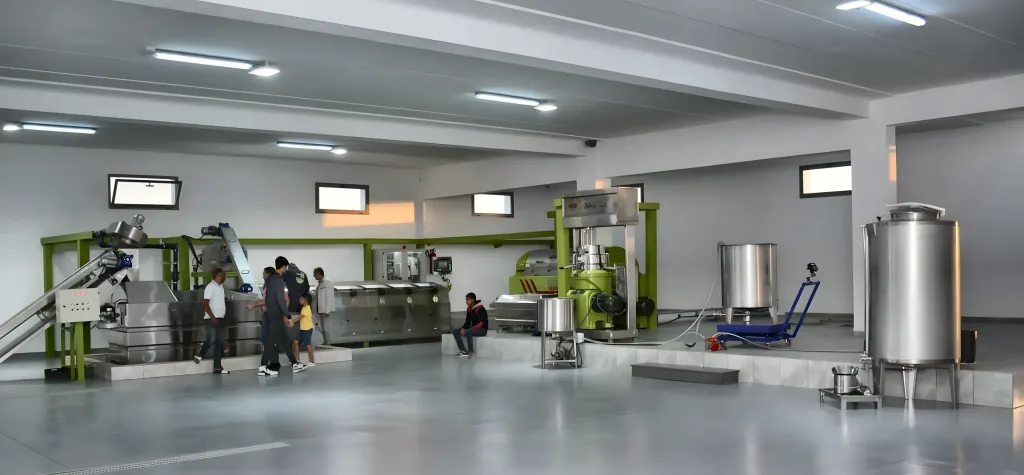
Clean, modern and close to the trees
Our extraction line is the one at Huilerie Amamou Moderne, the mill founded by Kamel Amamou in Kalaa Kebira: a continuous, stainless-steel system in a bright, easy-to-clean hall, able to process about 80 tonnes of olives a day. Having it a short drive from our trees is what lets us press the olives soon after picking, and it’s one of the main reasons a farm can make better oil than a long supply chain.
Because the farm and the facility are ours, every lot can be traced from the grove to the tank.
What we check on every lot
- Free acidity
- Within the extra virgin / virgin limits
- Peroxide value
- Freshness and oxidation
- UV absorbance (K232, K270)
- Purity and quality
- Sensory profile
- Fruitiness, no defects
Laboratory analysis reports are available on request for every lot we sell.
Certifications & awards
Want to taste the difference?
Ask for a sample and the lab analysis of our current lot.